I work at the intersection of artificial intelligence, educational technology, and digital accessibility, bringing together the perspectives of an educator, researcher, instructional designer, and AI solutions developer. My professional journey is driven by a clear purpose: to bridge the gap between educational research, classroom realities, and technological innovation by designing intelligent, accessible, and evidence-informed solutions to real-world learning challenges.
I hold a Ph.D. in Learning Design and Technology, from Purdue University, a M.Sc. in Physics and Astronomy and a B.Sc.Ed. in Physics Education. I am currently pursuing a Master of Science in Computer Information Systems with a concentration in Artificial Intelligence at Indiana Wesleyan University. This combination strengthens my ability to connect how people learn with how intelligent technologies are designed, developed, and evaluated. Additionally, providing an interdisciplinary background in scientific reasoning, teaching, and problem-solving. As a Certified Professional in Accessibility Core Competencies (CPACC), I incorporate accessibility and inclusive design considerations into my approach to educational technology.
Beyond academic credentials, I bring practical classroom experience and hands-on educational technology development. What distinguishes my work is the connection between research-informed instructional design and practical AI development. I investigate learning challenges, translate them into instructional and technical requirements, develop prototypes, and critically evaluate how those solutions respond to their intended purposes.
What I Bring to the Table - Core Expertise
AI and Educational Innovation
Designing and prototyping AI-enabled learning tools that support instructional decision-making, critical thinking, and human oversight.
Learning Design and Research
Applying learning theories, instructional design frameworks, and research methodologies to develop and evaluate educational experiences.
Digital Accessibility
Applying accessibility principles and inclusive design practices to make digital learning environments more usable for diverse learners.
Classroom Practice and Implementation
Connecting research-informed educational solutions with the practical realities of teaching, learning, assessment, and classroom engagement.
Interdisciplinary Collaboration
Bringing together perspectives from education, physical sciences, instructional design, and AI development to solve problems across disciplinary boundaries.
Current AI Projects
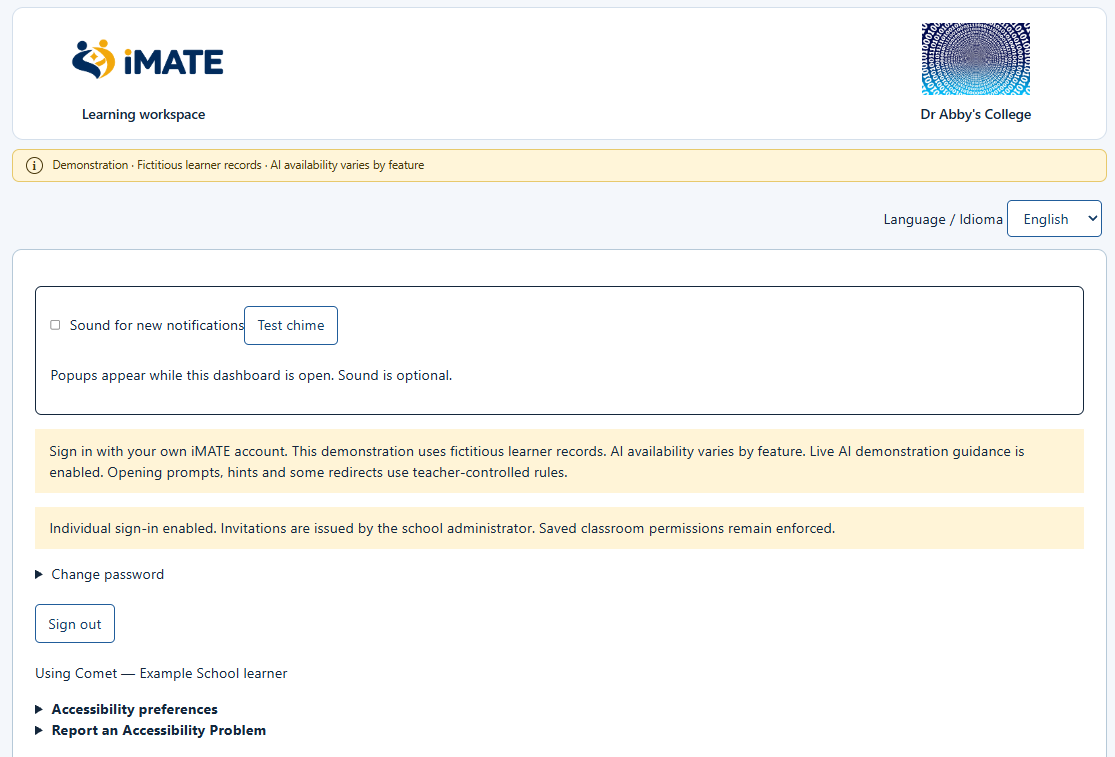
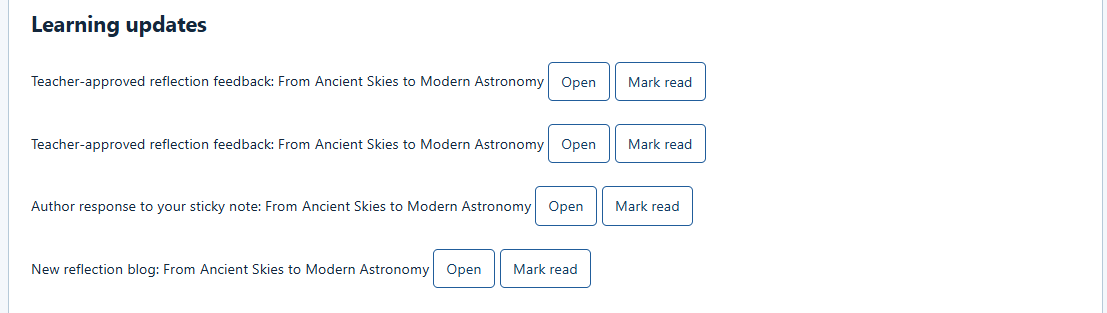
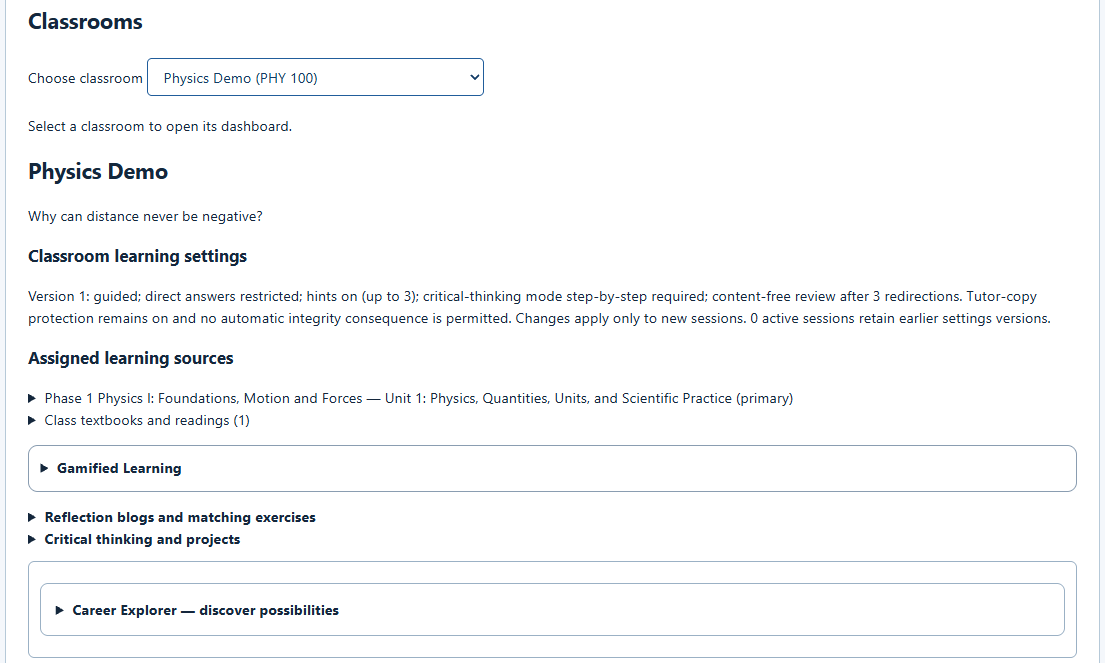
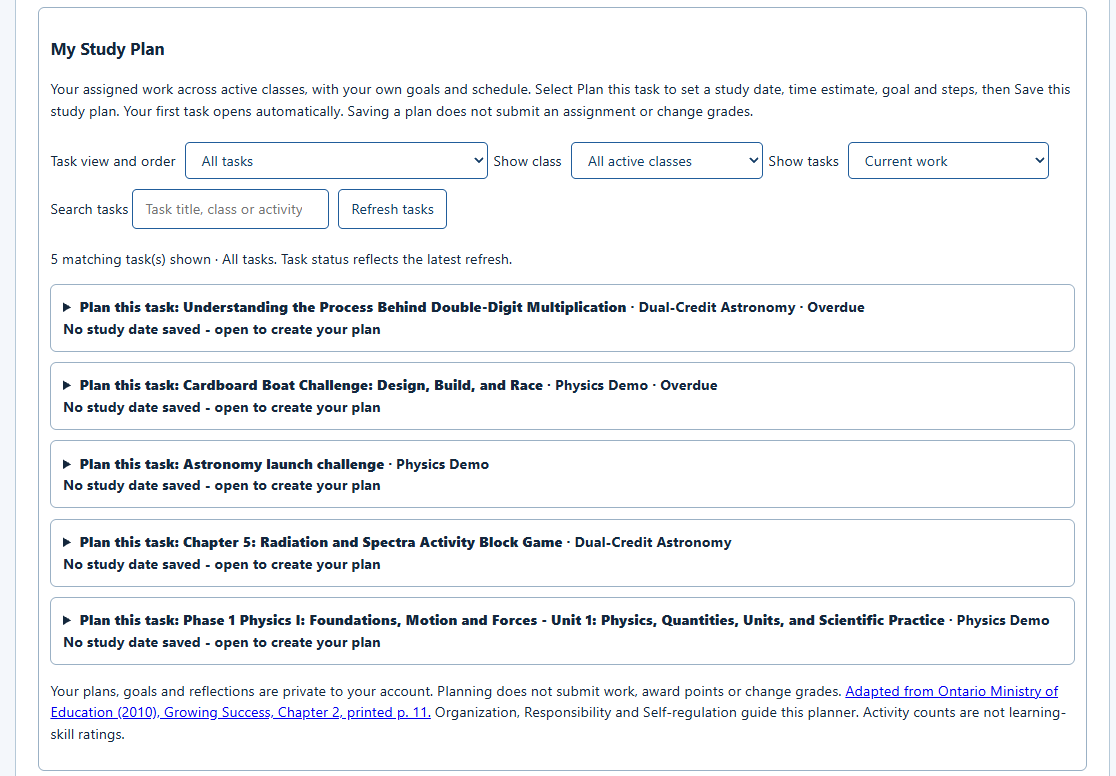
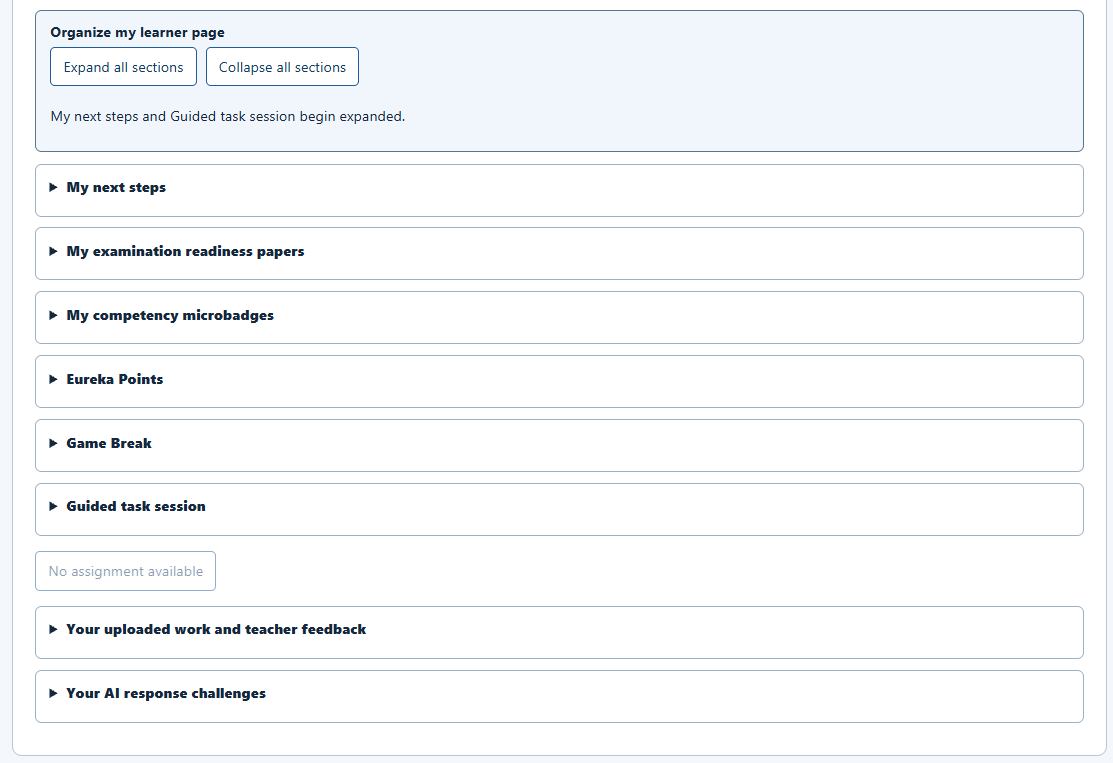
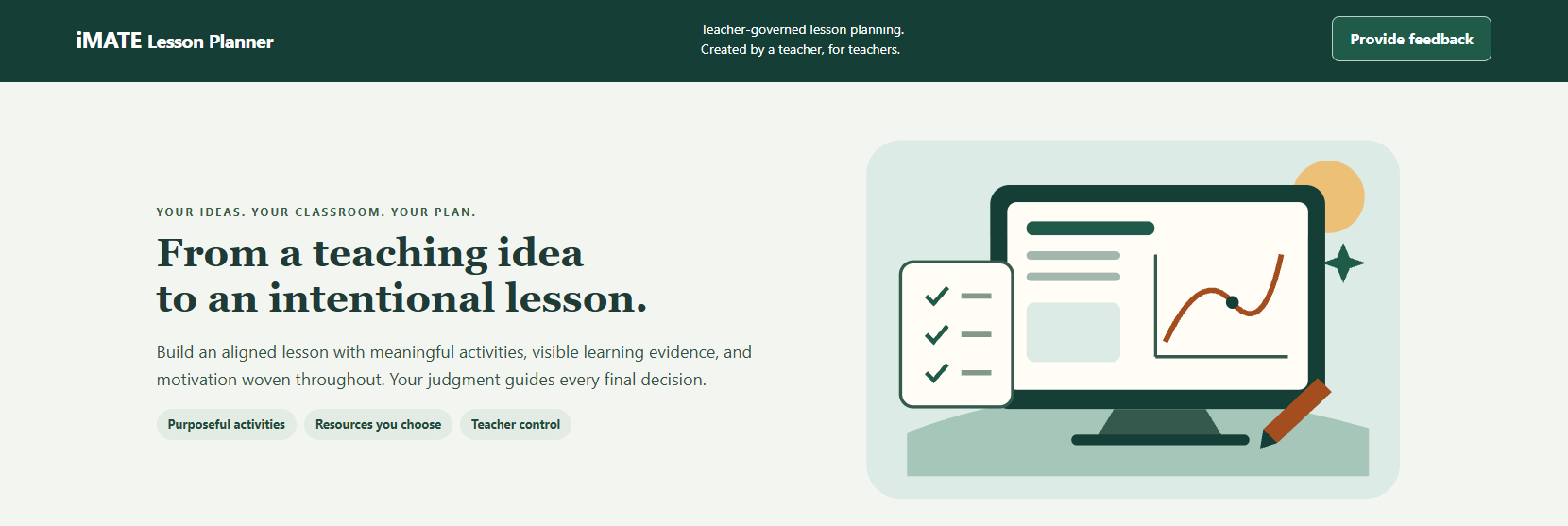
iMATE — Human-Centered AI Learning Support
Developing an AI-enabled learning support platform designed to encourage productive struggle, critical thinking, and graduated instructional assistance while maintaining teacher oversight.
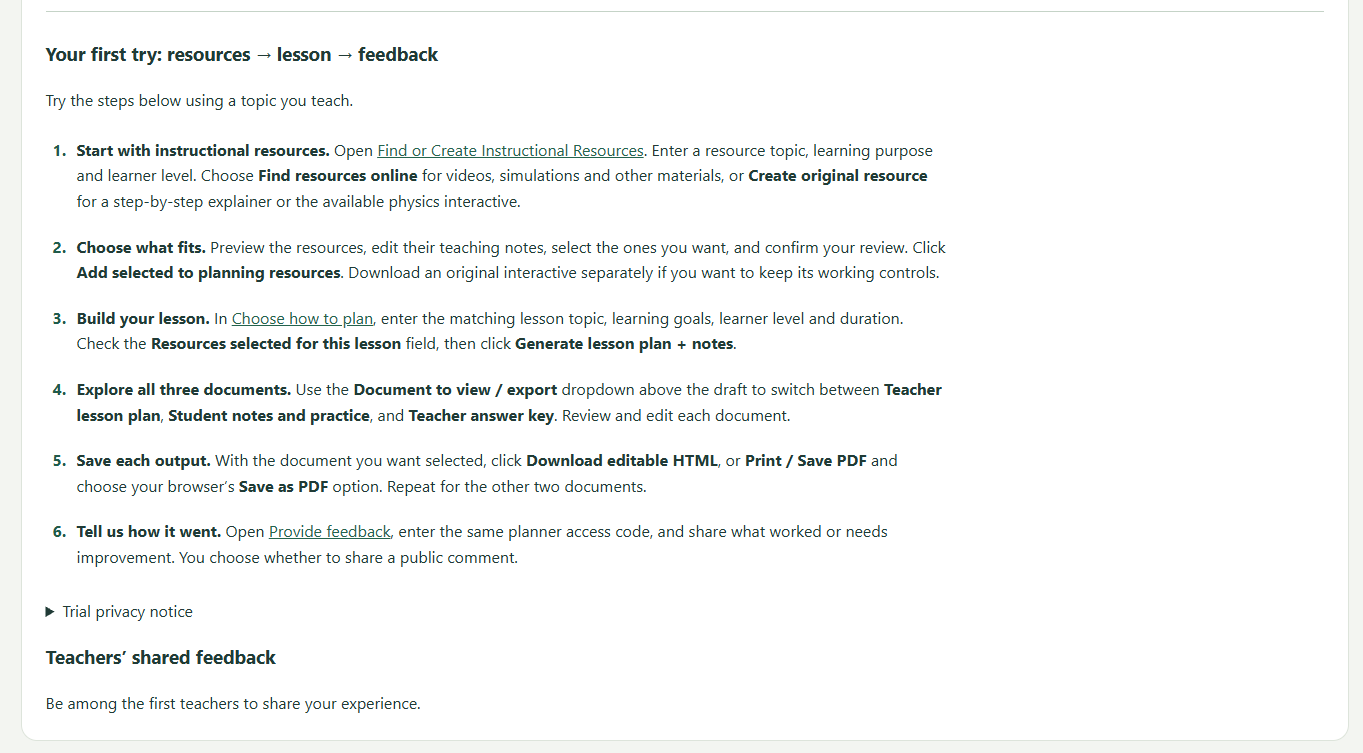
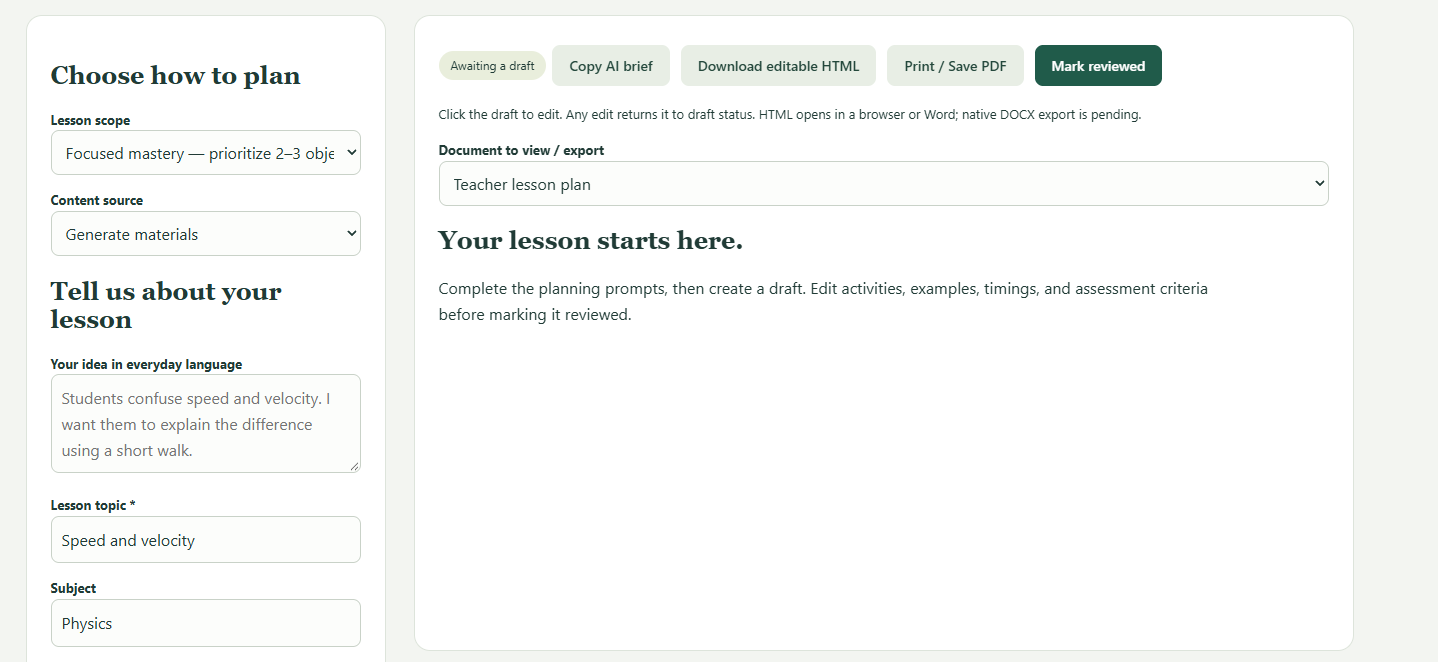
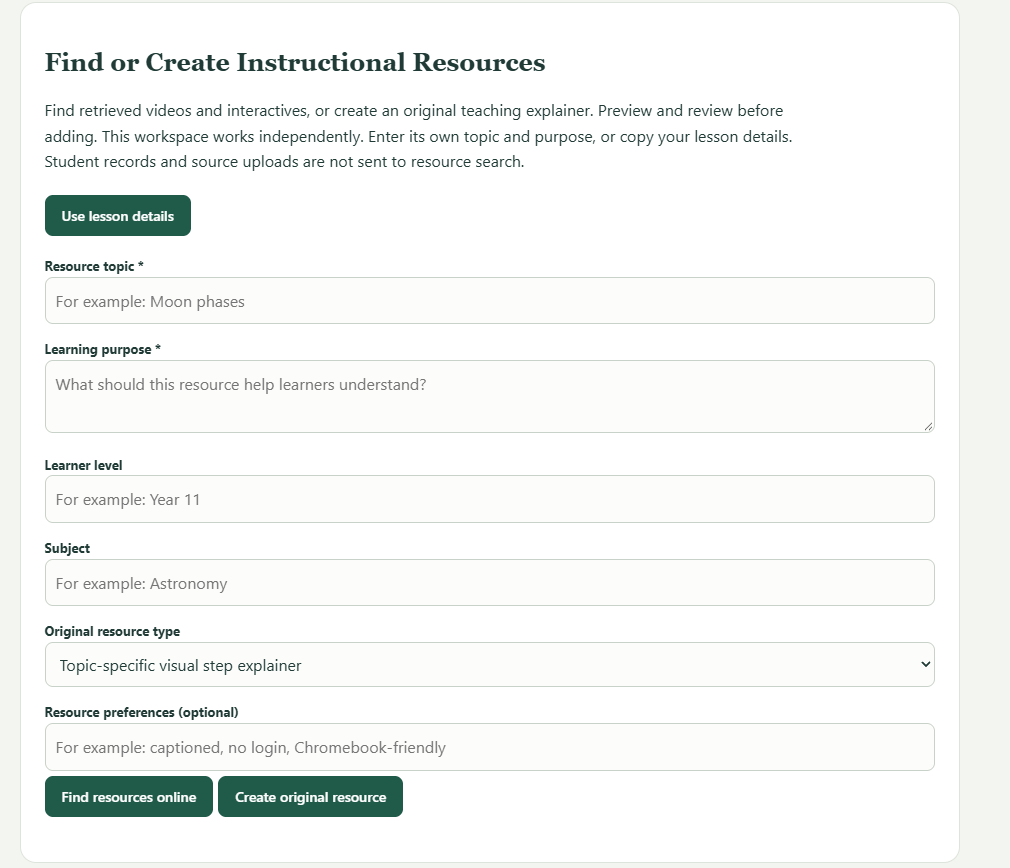
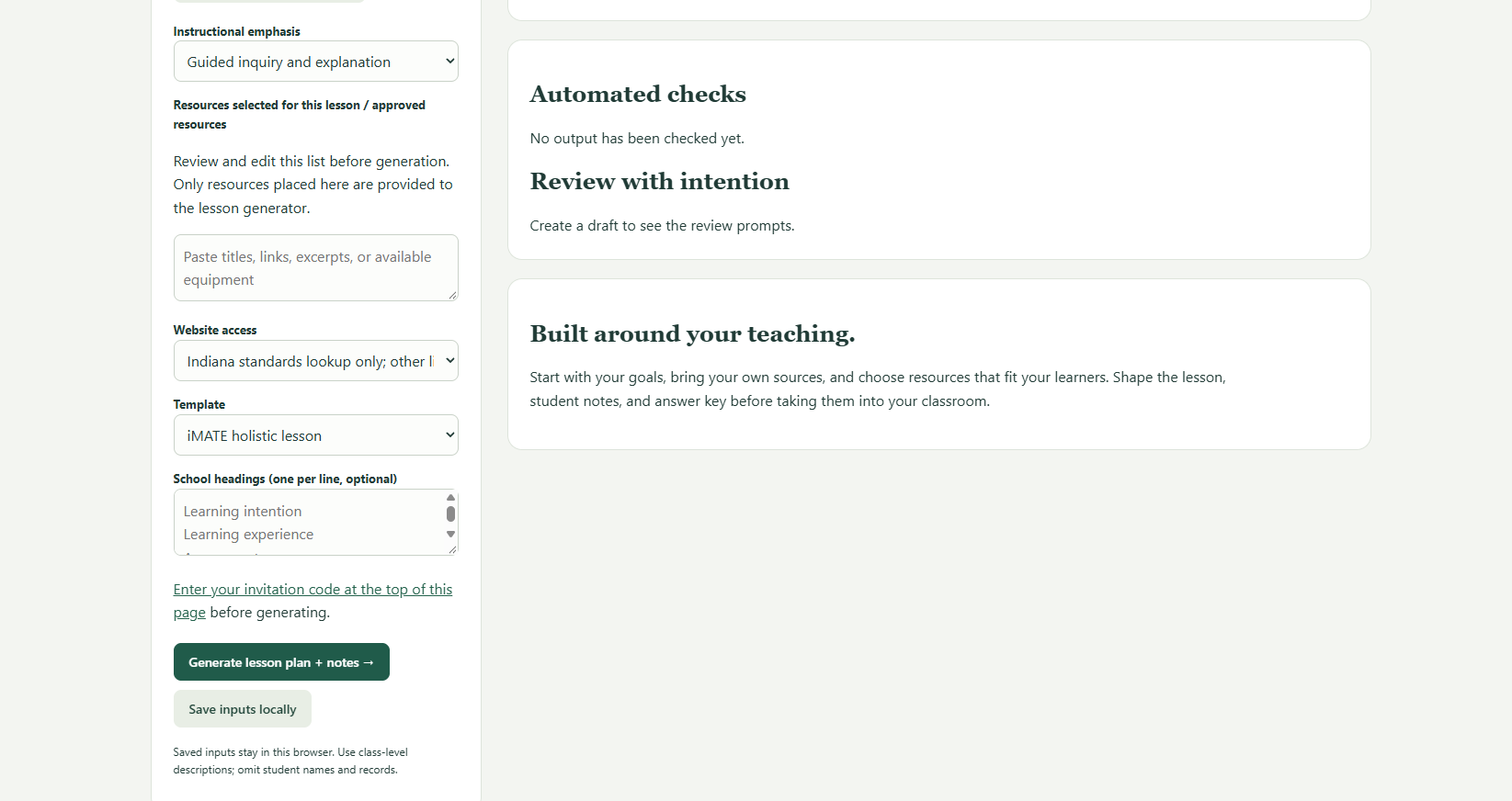
Designing a teacher-guided lesson-planning tool that uses generative AI to support structured, curriculum-aligned instructional planning, teaching resource generation while preserving educator control.
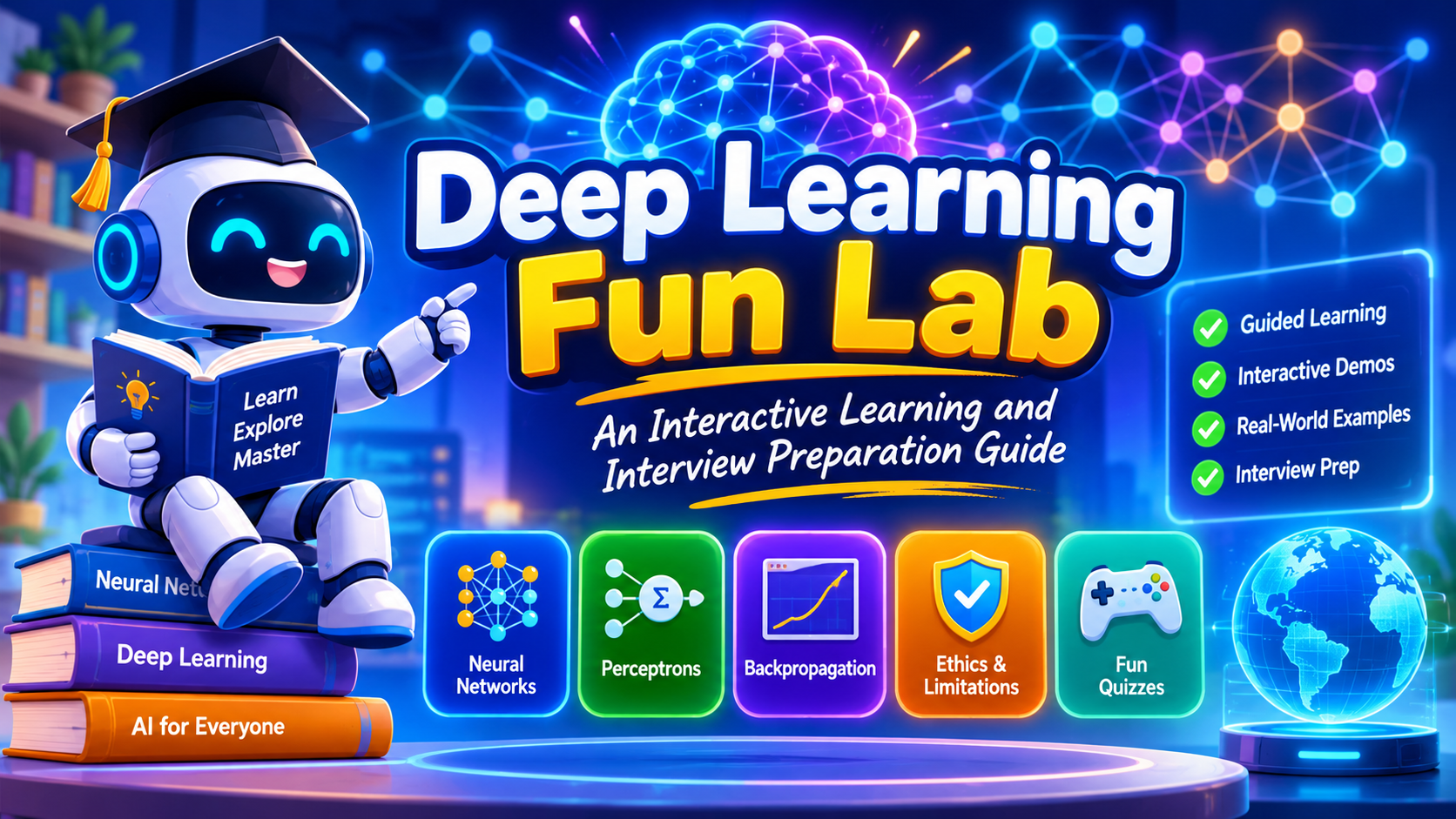
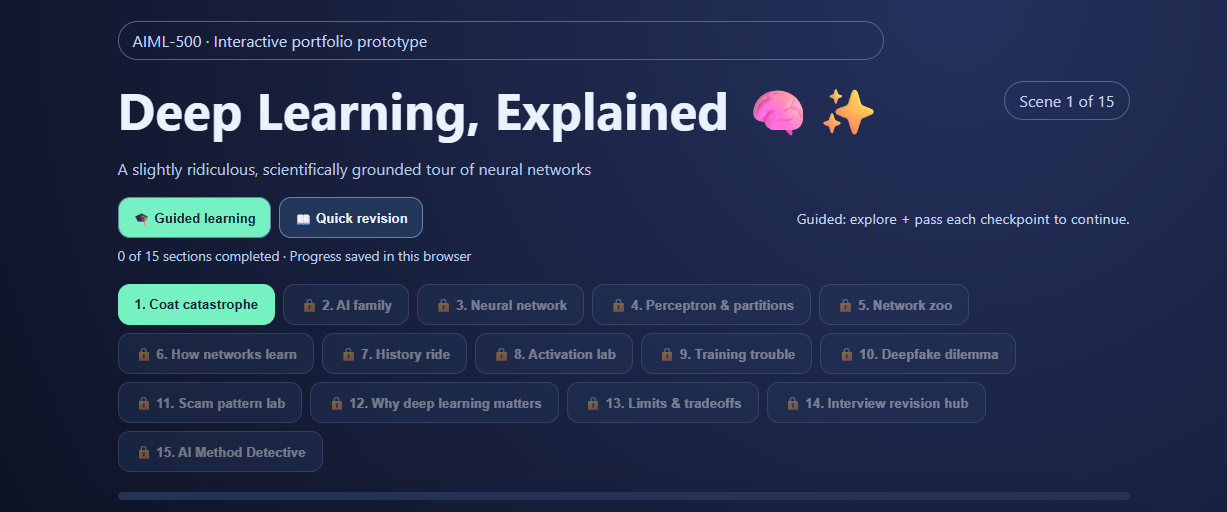
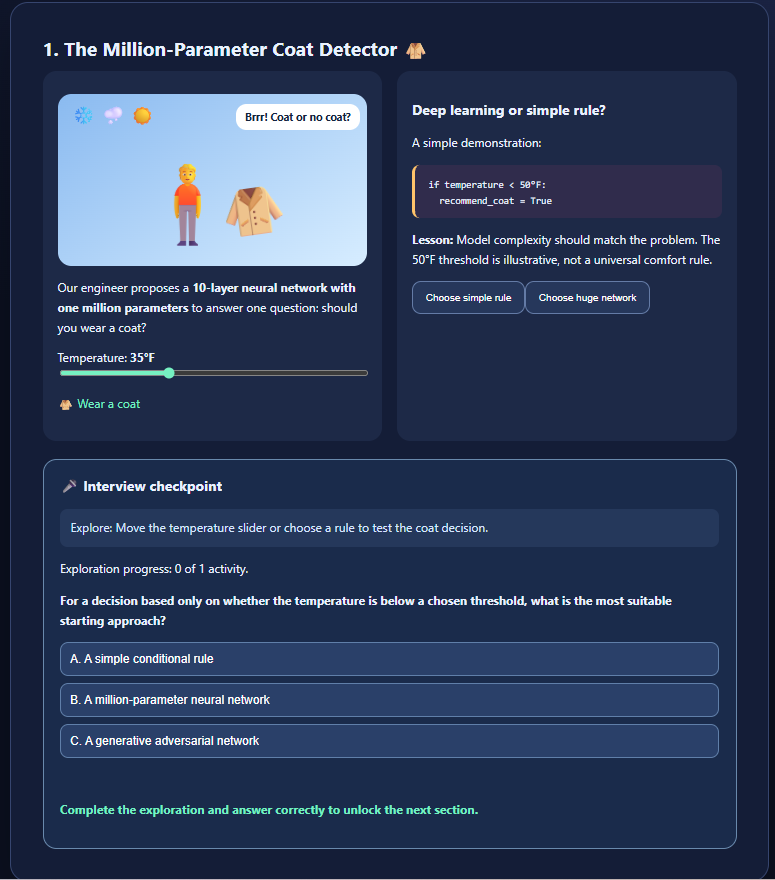
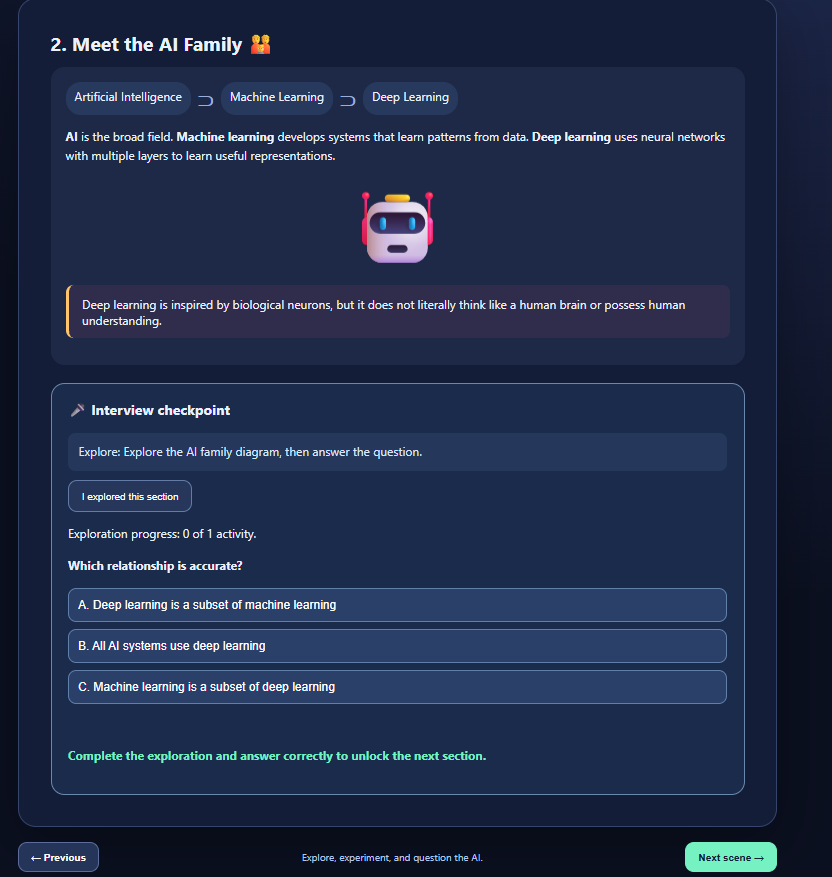
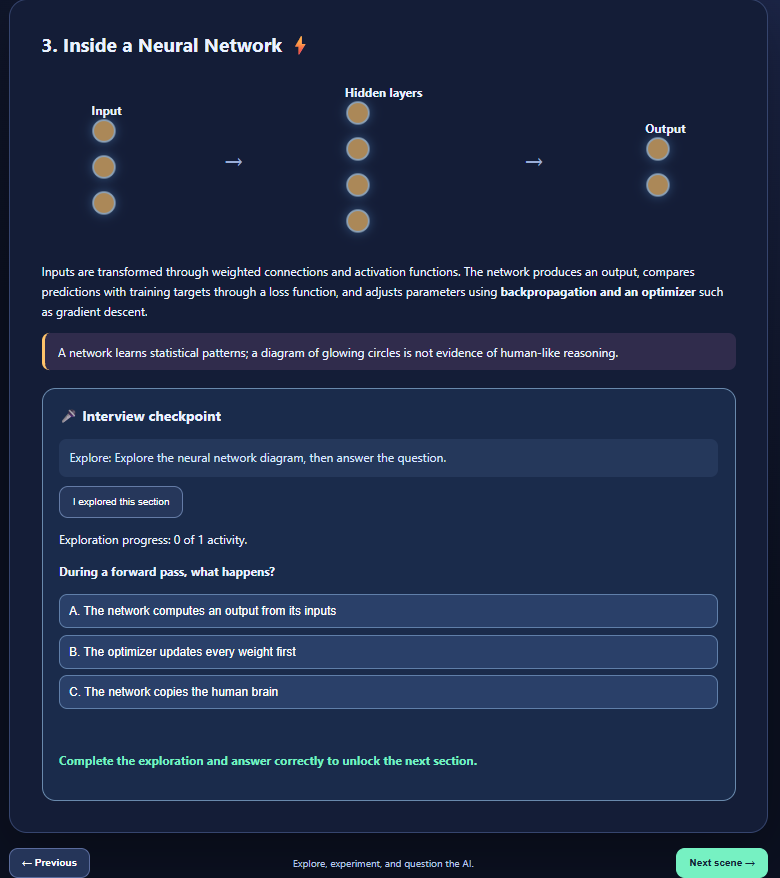
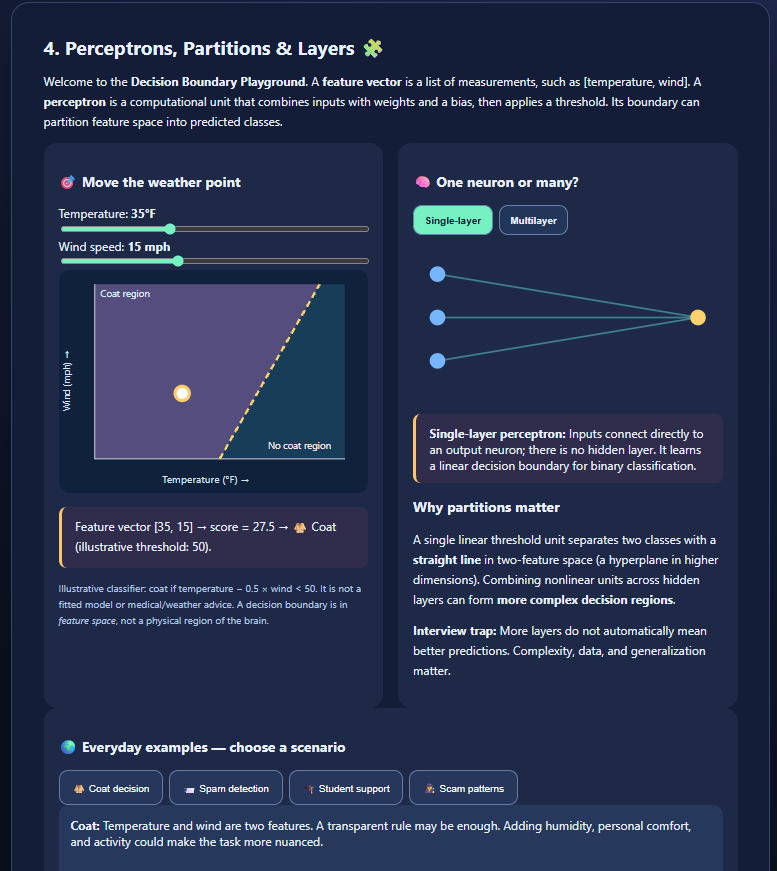
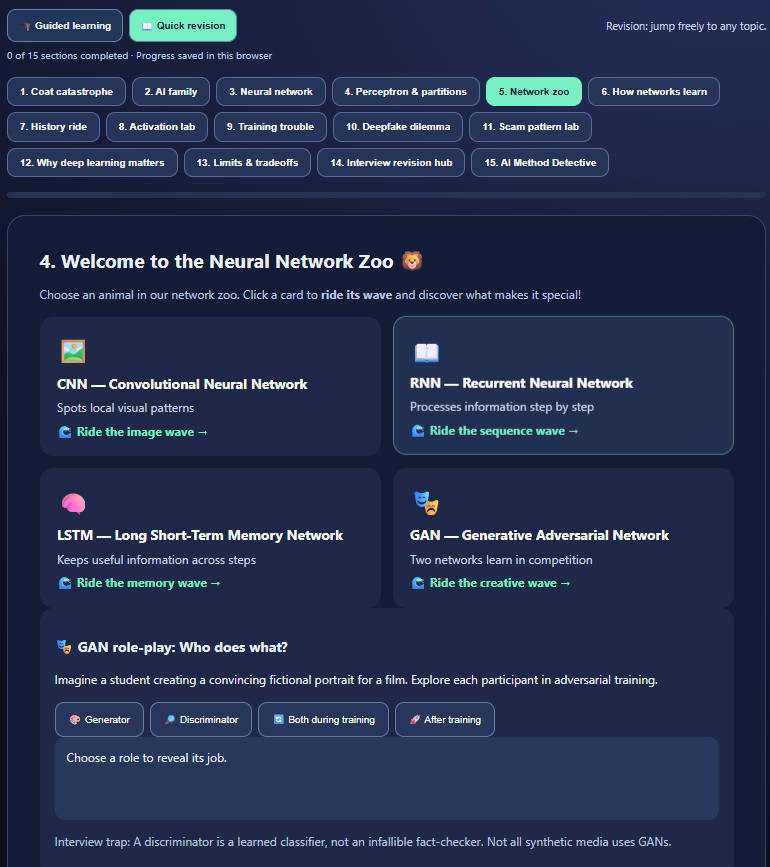
Deep Learning Fun Lab: An Interactive Learning and Interview Preparation Guide
Deep Learning Fun Lab is an interactive educational resource designed to help beginners and aspiring AI professionals understand foundational deep learning concepts. It uses animated demonstrations, relatable real-world scenarios, guided exploration, and formative assessments to explain neural networks, perceptrons, decision boundaries, deep learning architectures, backpropagation, and ethical considerations.
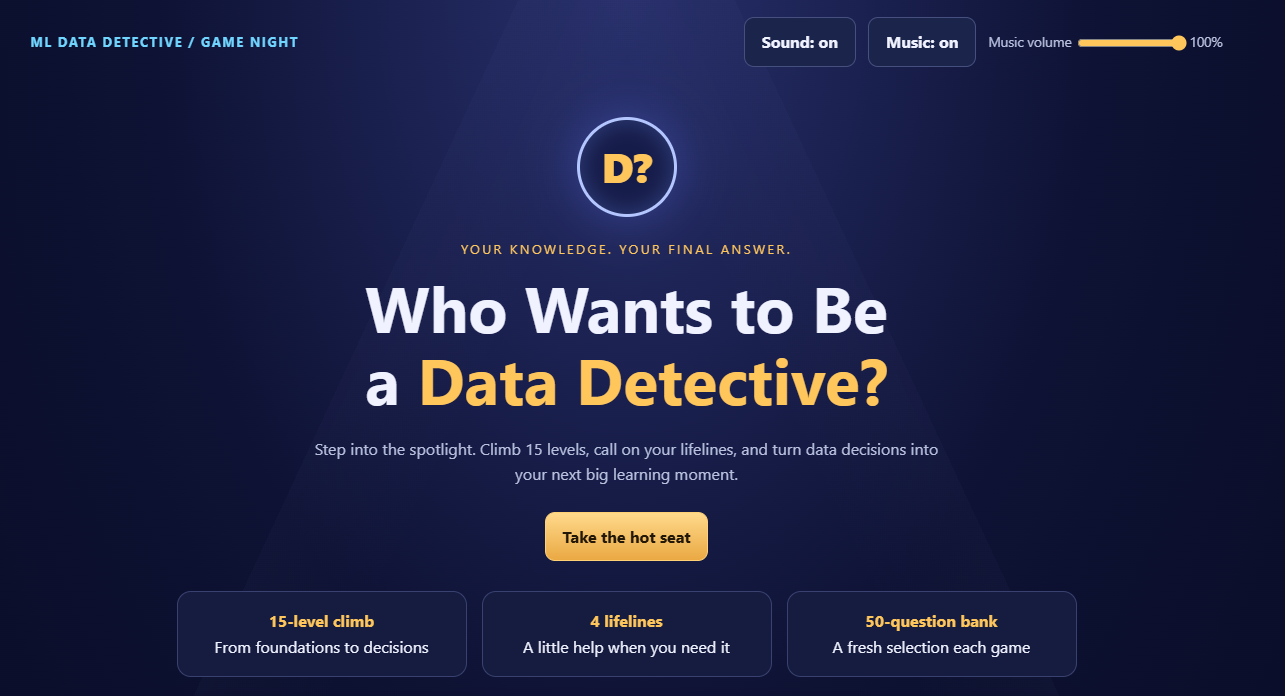
Who Want To Be A Data Scientist? - Adapted from Who wants to be a millionaire
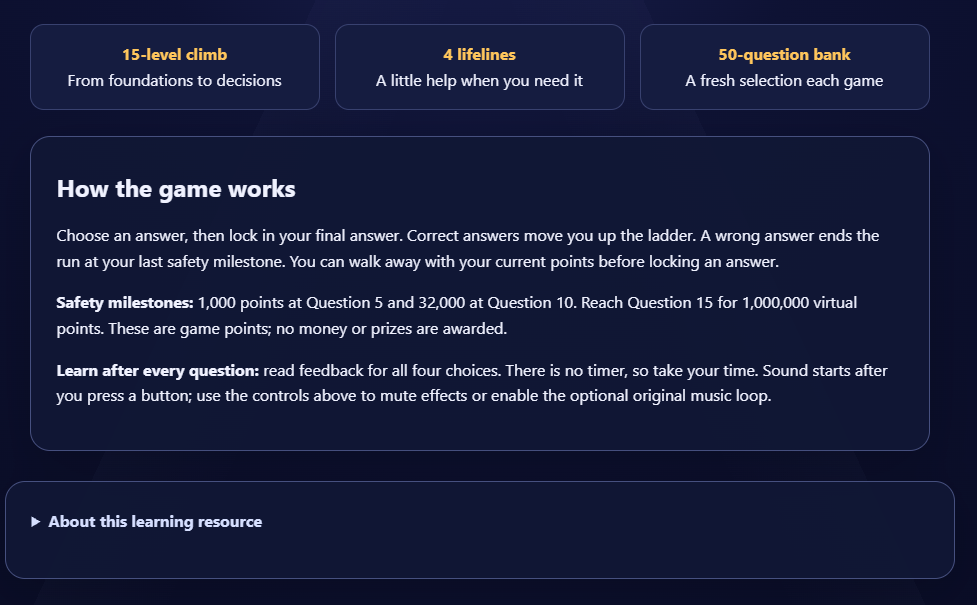
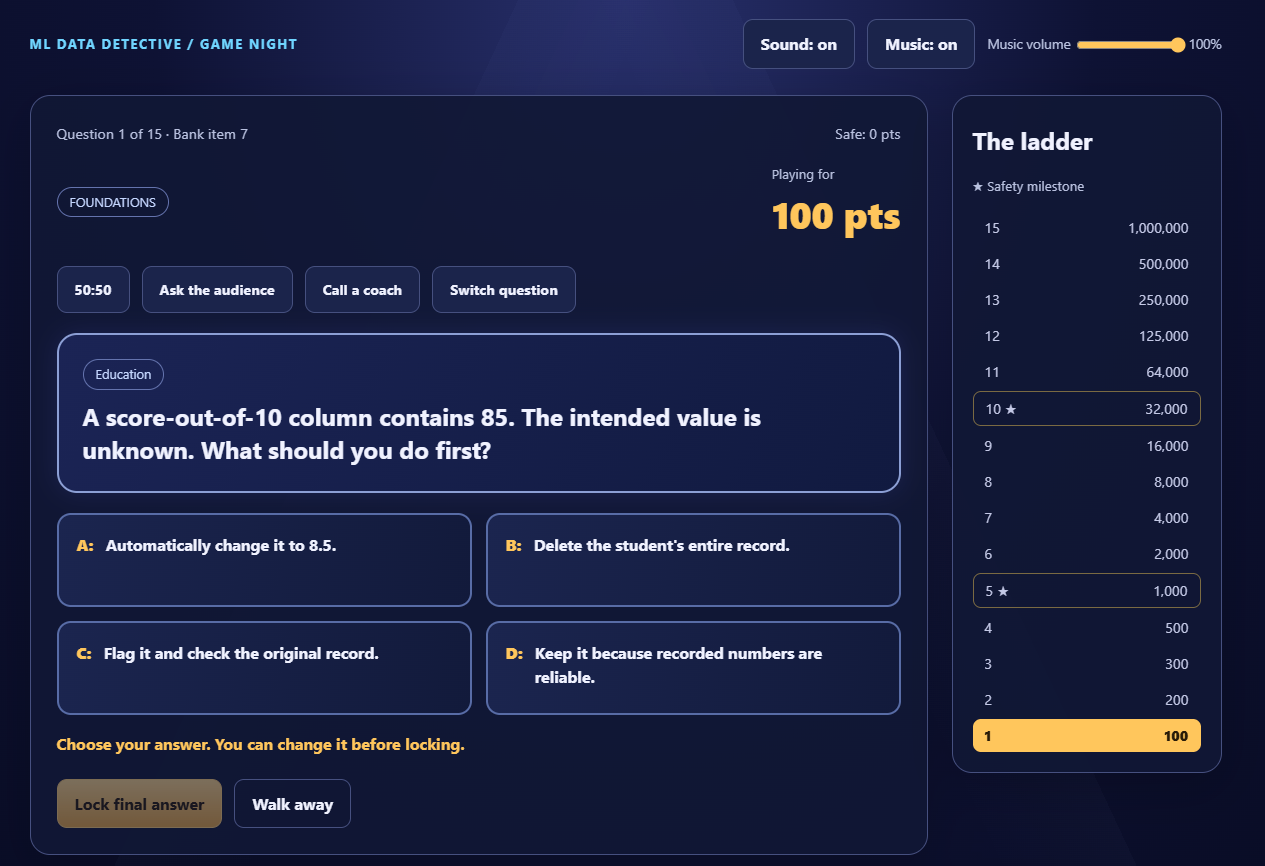
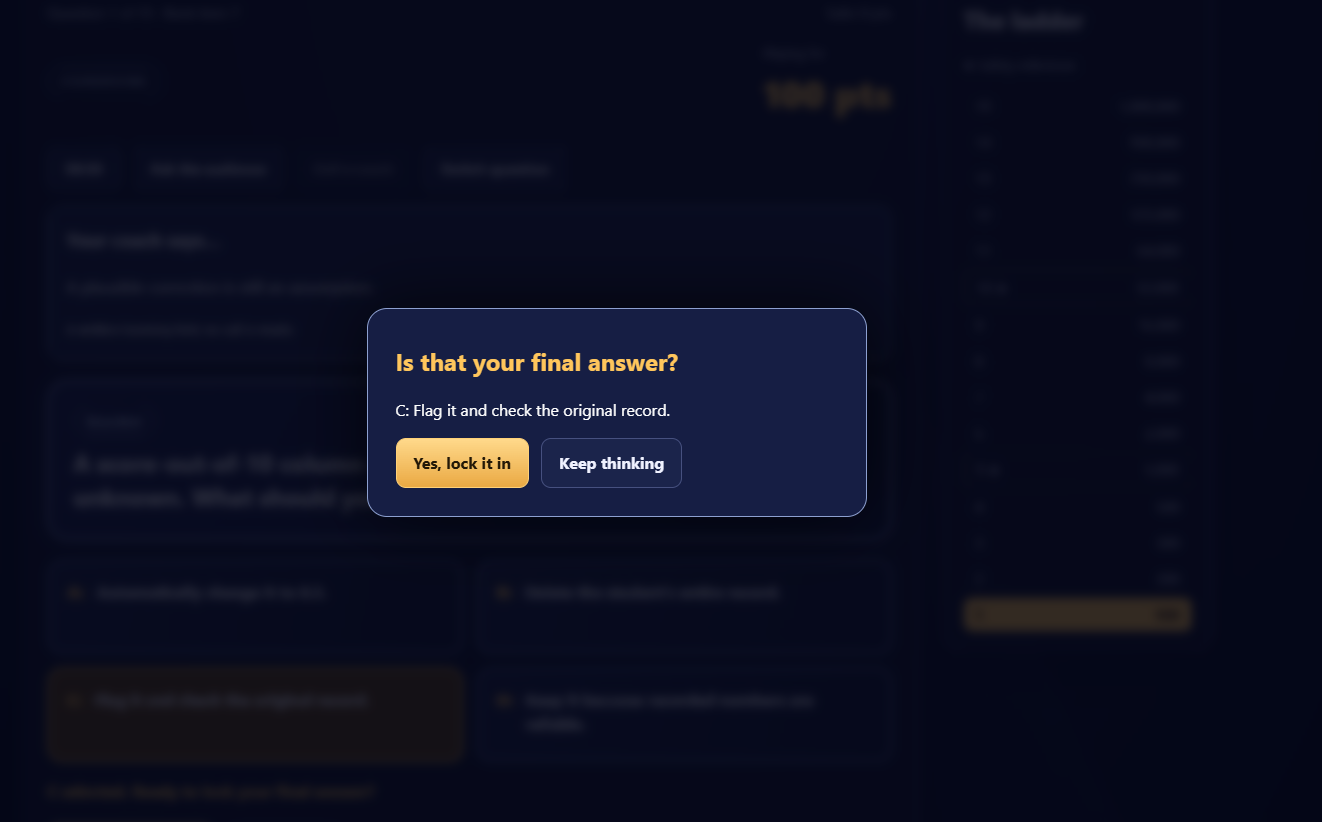
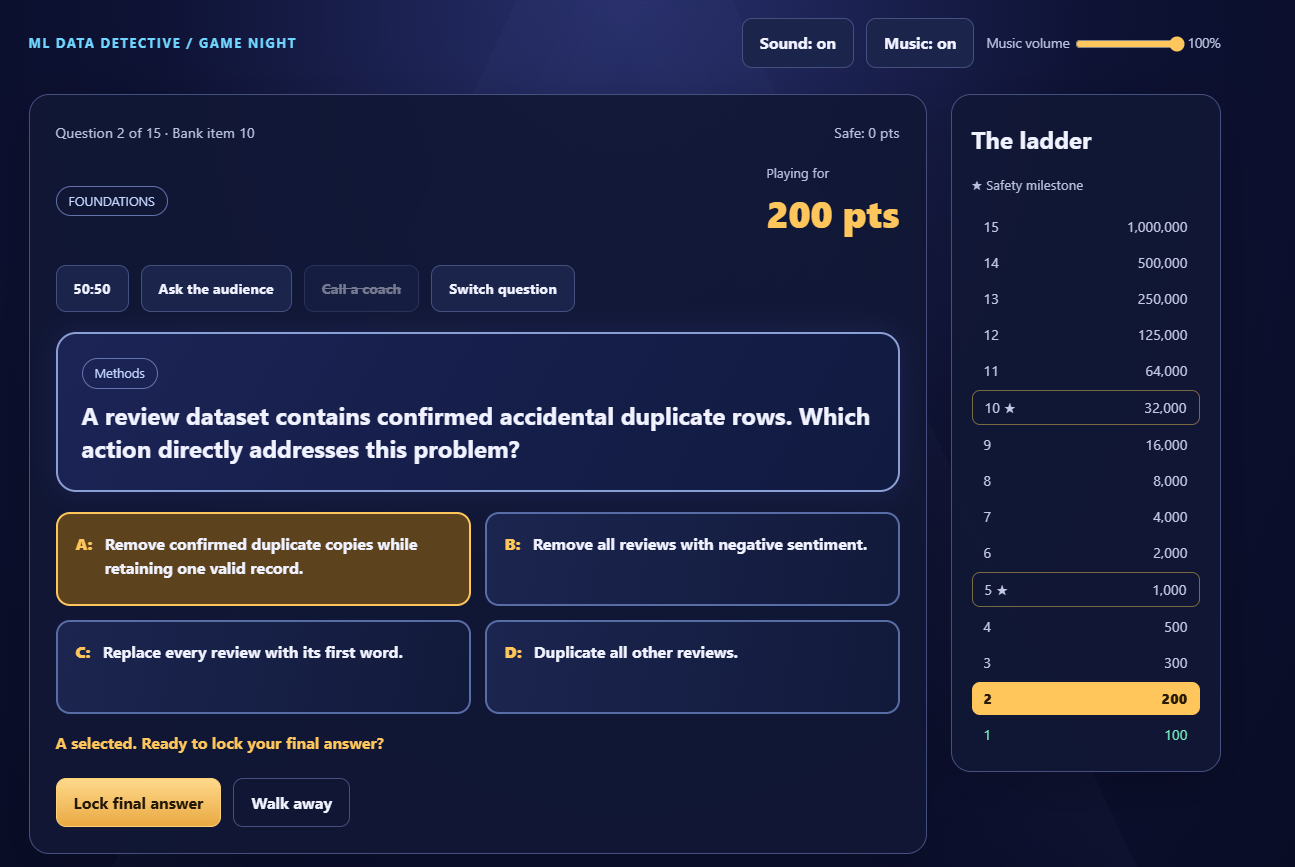
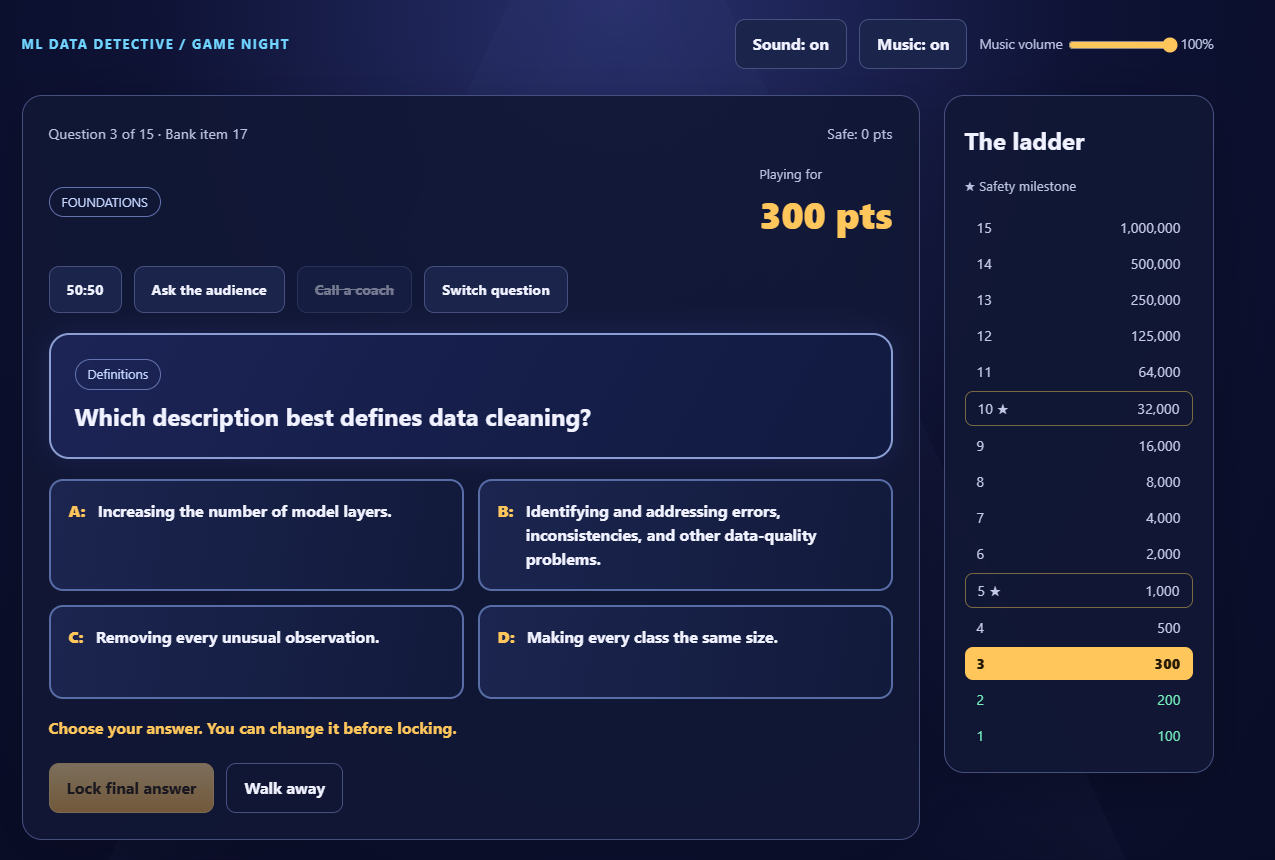
Who Wants to Be a Data Detective? – expands my Data Challenge coursework into a reusable learning resource. The objective is to help users explain terminology, recognize data problems, select appropriate methods, and interpret model results.
The 50-question bank contains five categories, with ten questions in each: education scenarios, industry scenarios, definitions, method selection, and interpretation of results.
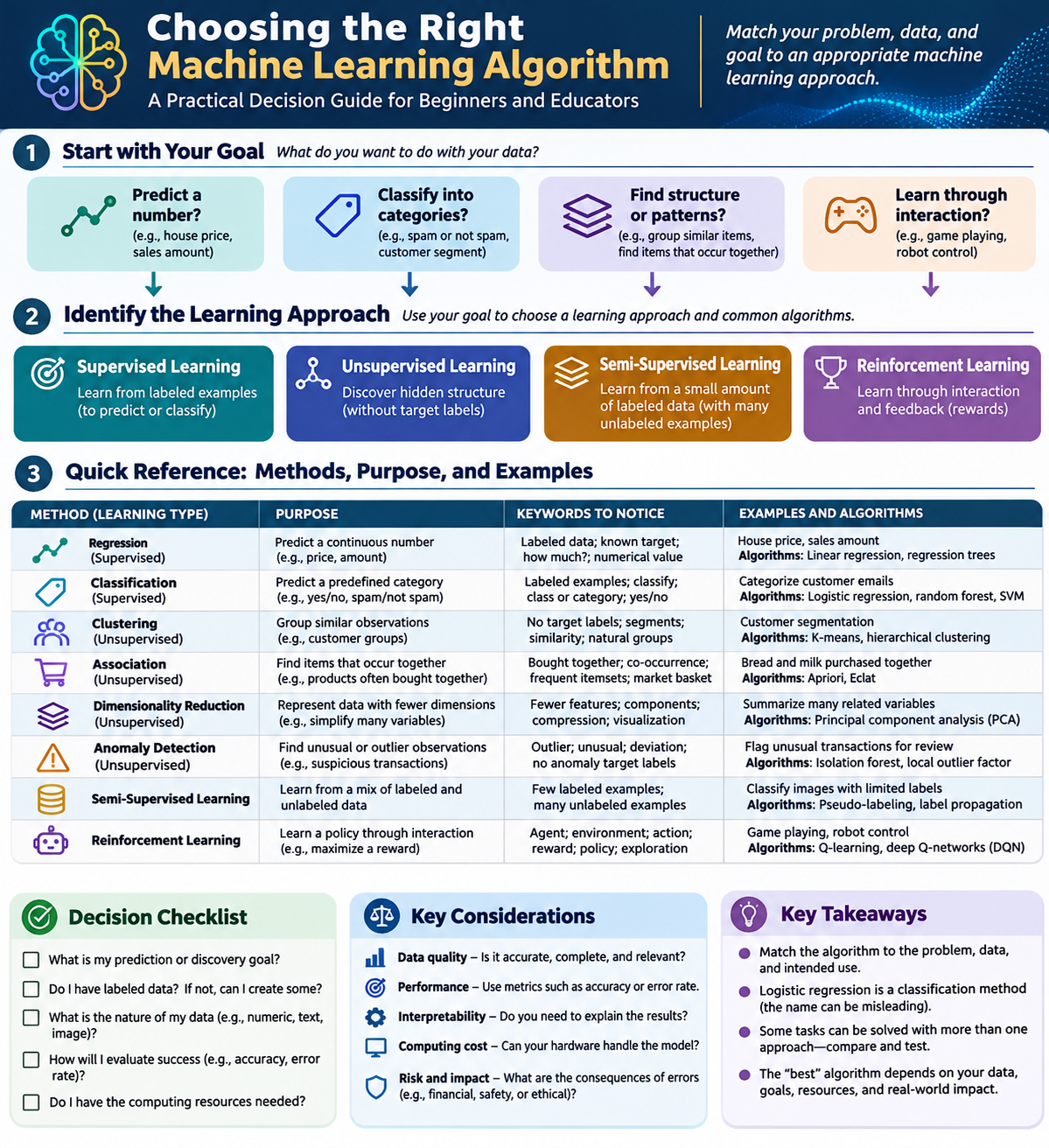
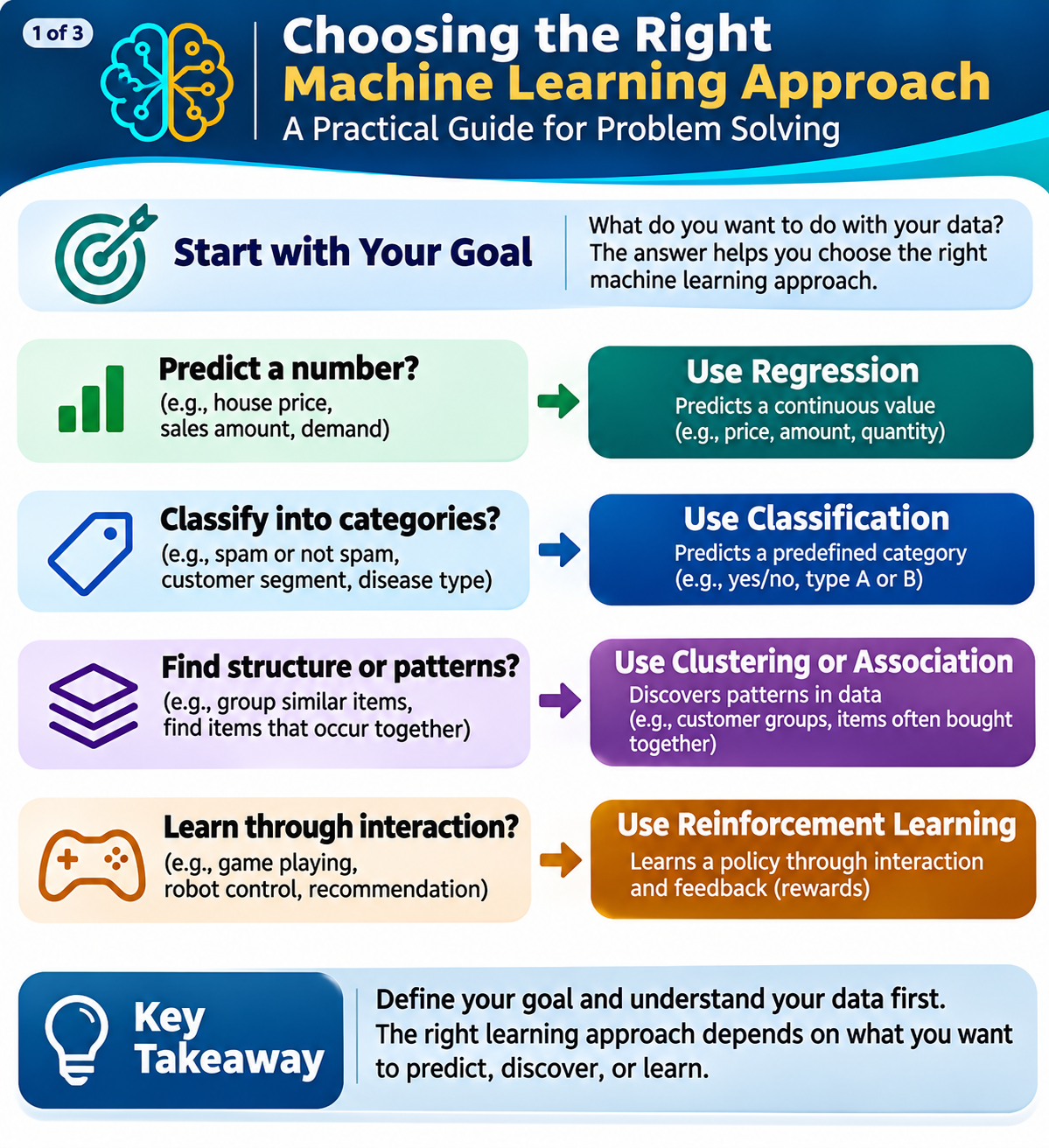
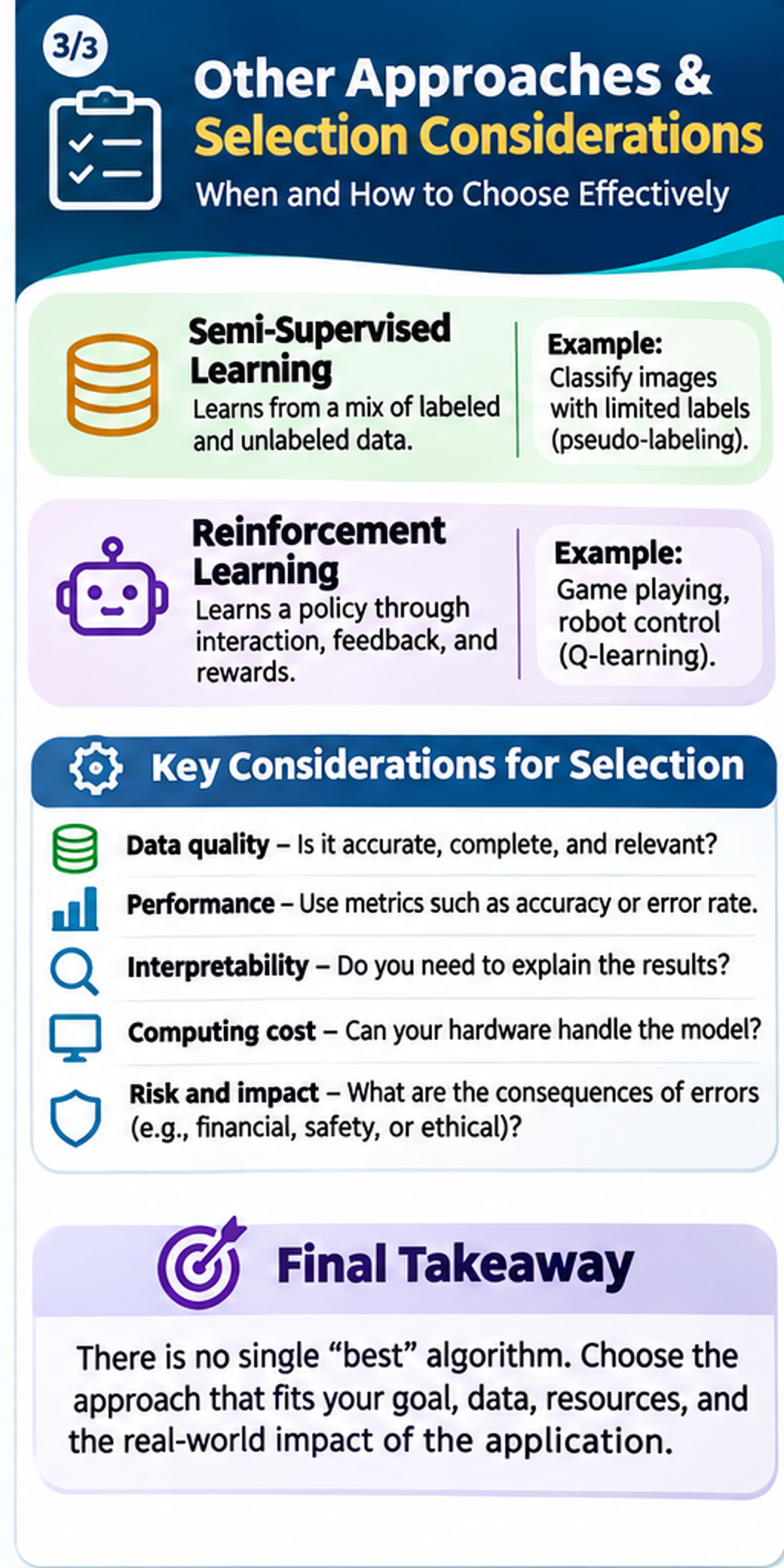
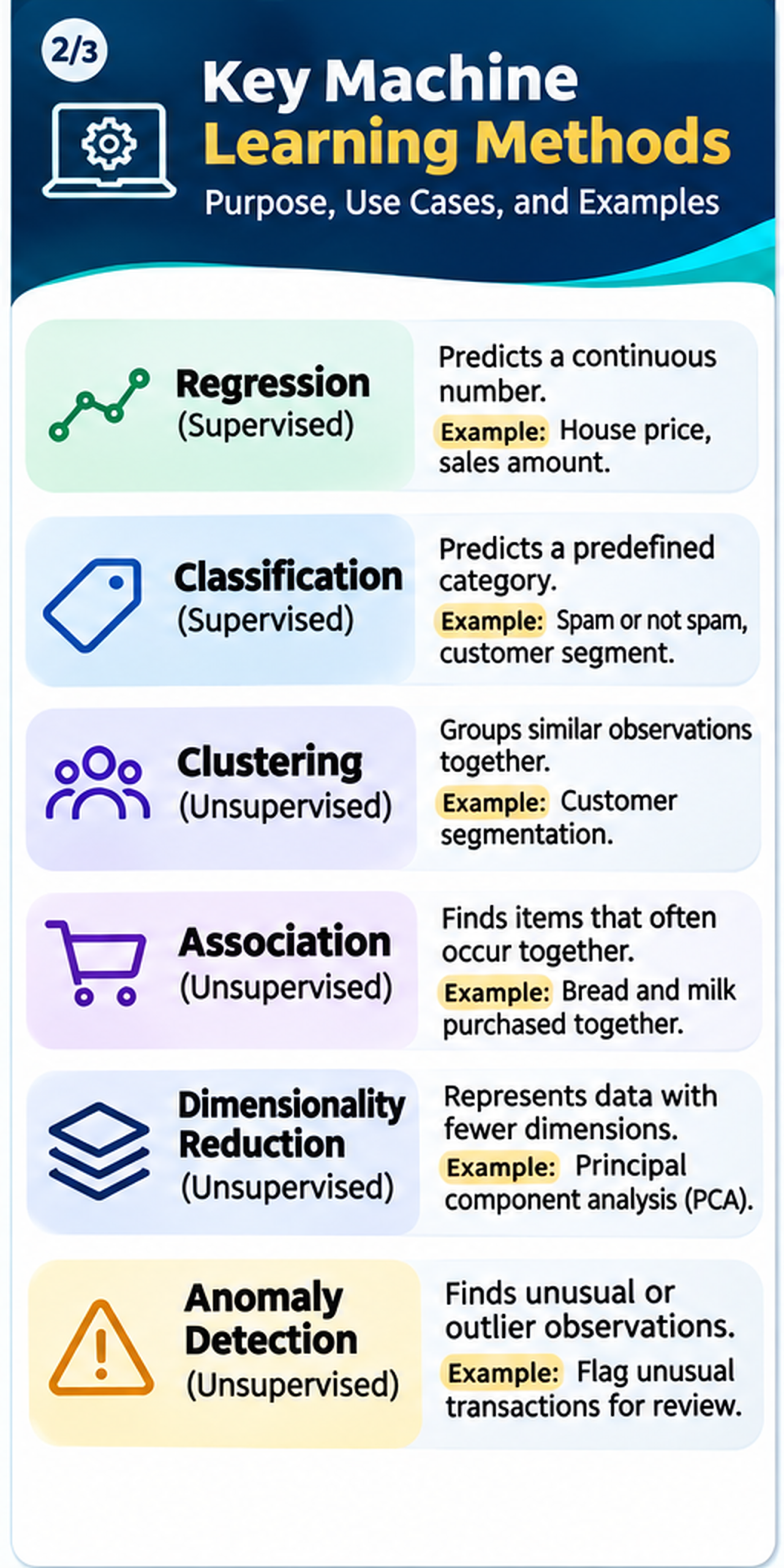
The infographics guide readers through identifying machine learning problems, understanding different learning approaches, and selecting appropriate algorithms for real-world applications. They cover supervised, unsupervised, semi-supervised, and reinforcement learning, with examples involving regression, classification, clustering, association, dimensionality reduction, and anomaly detection.
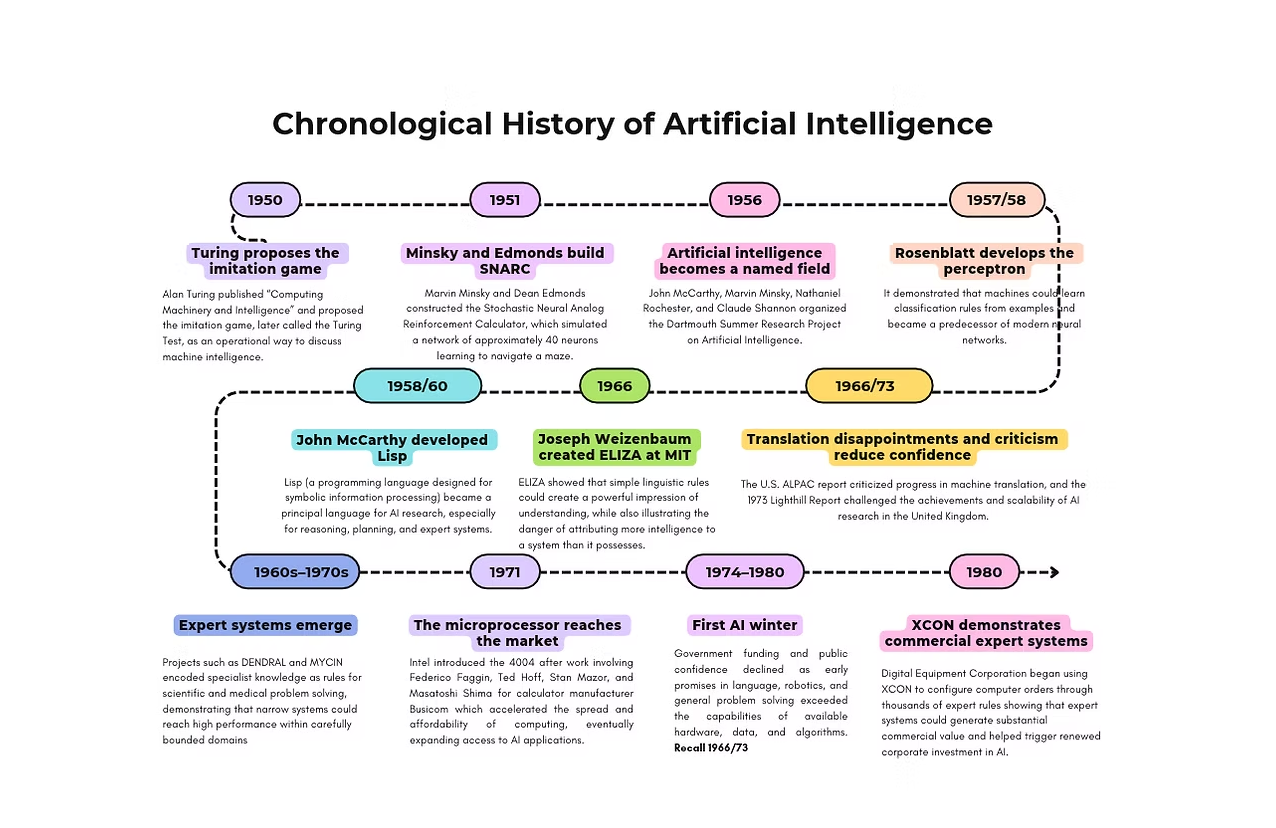
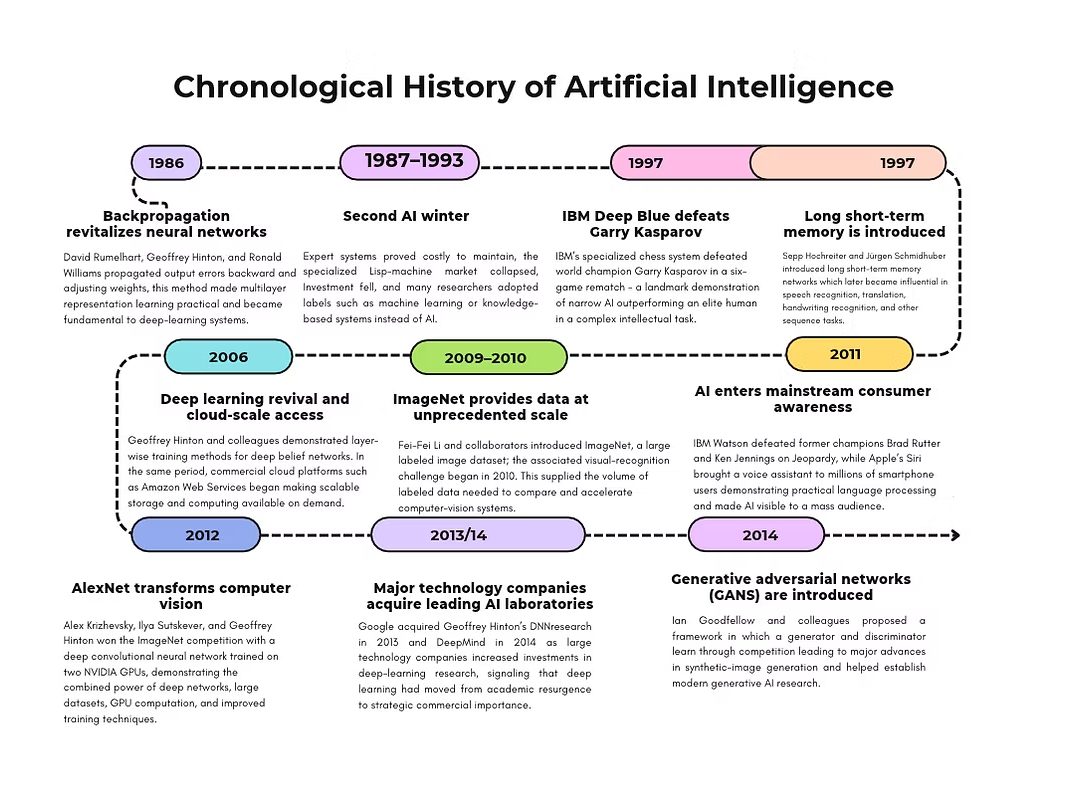
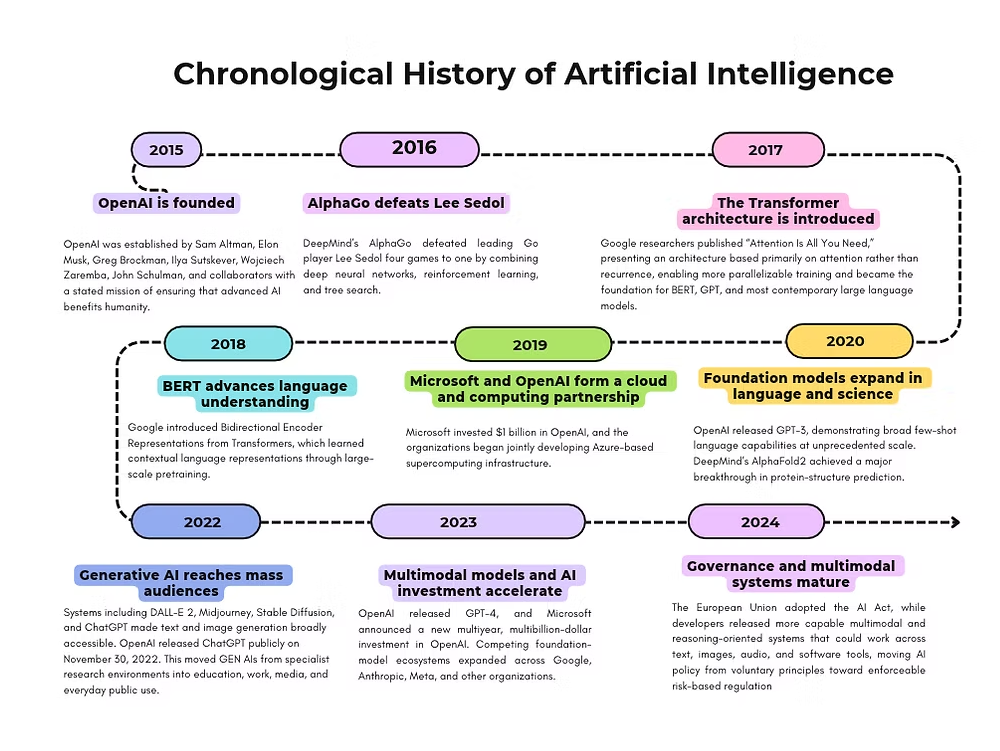
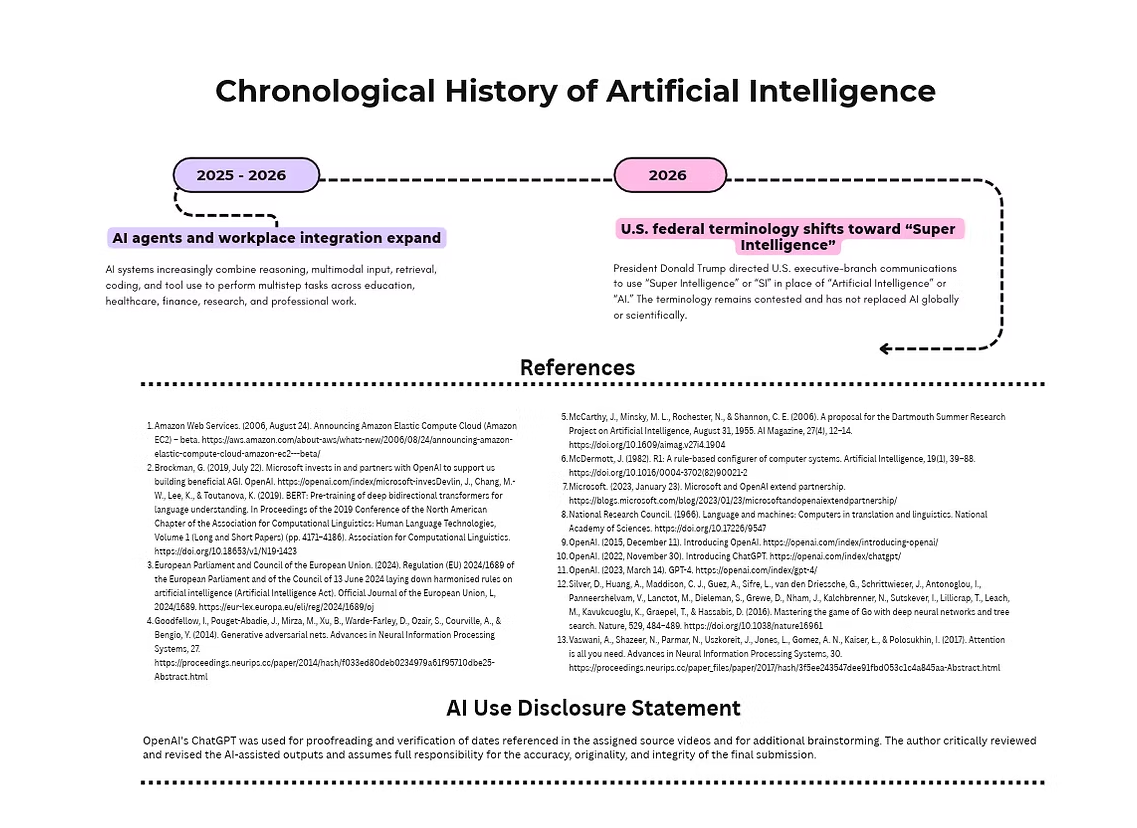
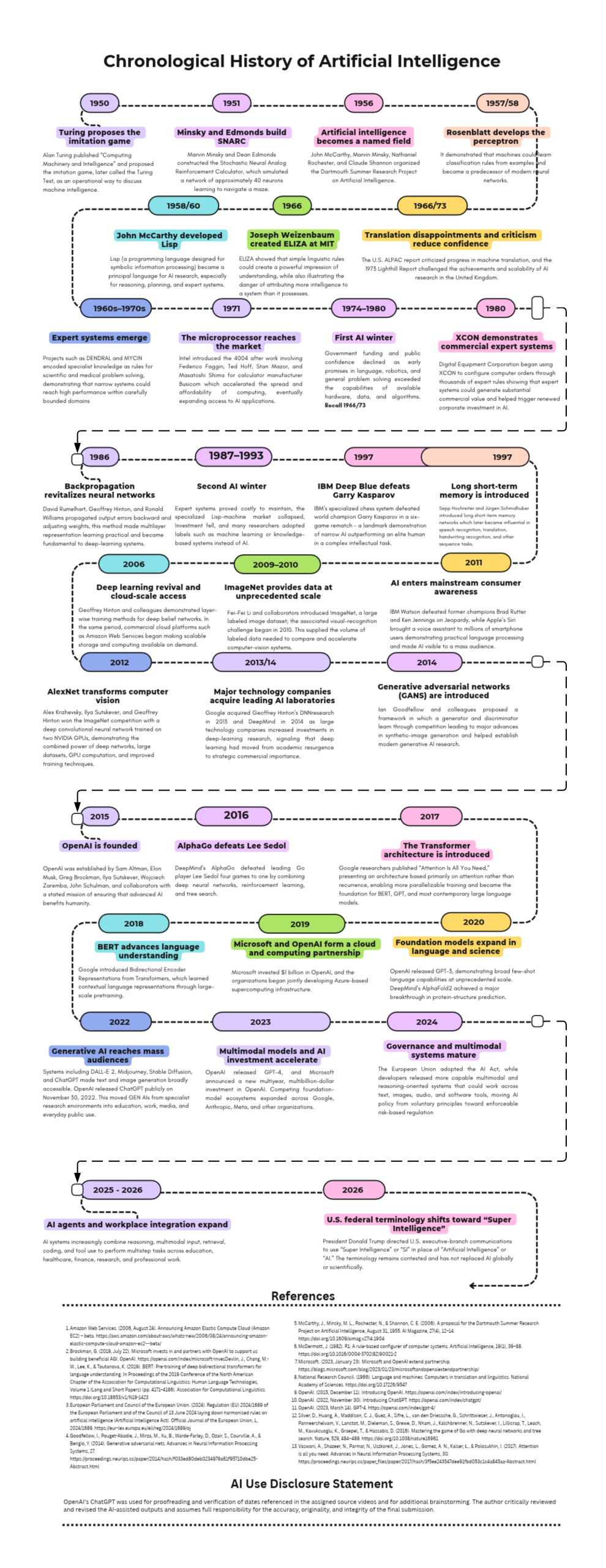
Historical Synthesis and Visual Learning Resource Design
The history of artificial intelligence involves developments in computing, research, data, commercial applications, and governance. I created this timeline to organize selected milestones into a connected visual reference that educators, students, and readers entering the field could explore without first reading a lengthy historical account.
This module prepares pre-service physics teachers to teach Motion to K–10 learners in virtual learning environments using videos, animations, and interactive instructional resources. Participants explore fundamental concepts of motion, examine real-world applications in robotics, music, sports, self-defense, security, and medicine, and learn to differentiate between average, instantaneous, and total speed and velocity.
The module incorporates introductory videos, Genially interactive slides, practice exercises, and pre- and post-module assessments. Participants conclude by submitting a survey link associated with their observed virtual teaching session.
This e-learning course prepares educators to design and facilitate engaging, authentic, and effective learning experiences for adult learners. Participants explore adult learners’ characteristics and behaviors, apply relevant learning theories to strengthen instructional competence and confidence, and select appropriate teaching strategies to promote and sustain learner engagement. The course culminates in the practical application of these principles through the design of an authentic and engaging lesson.
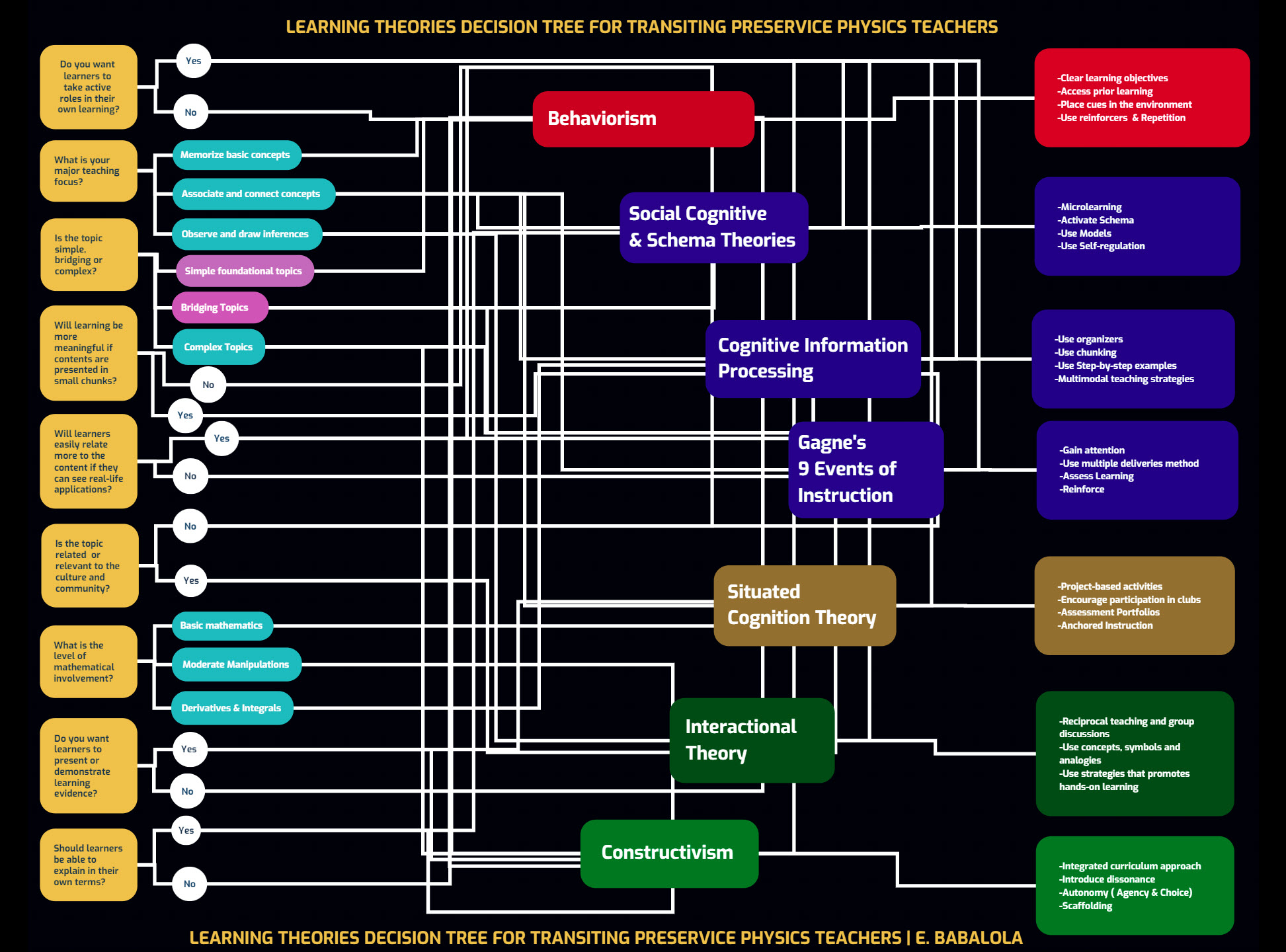
This virtual library provides pre-service teachers with flexible, accessible, and self-directed resources for exploring learning theories. Users can quickly review theory overviews, select topics relevant to their instructional needs, and access additional resources for further study. Designed for both online and offline use through an HTML format, the library also offers downloadable and printable PDFs and infographics for each learning theory, supporting convenient reference and instructional planning.
This instructional module showed preservice physics teachers how to apply Gagne’s 9 Events of Instruction in their teaching and learning using Energy as a sample topic.
Featured Designs | CANVA | COREL DRAW | ADOBE PHOTOSHOP
“I don’t just explore what artificial intelligence can do. I explore what it should do for people—designing intelligent, accessible, and evidence-informed solutions that address real-world challenges while keeping human needs at the center.”